Guide to Language Identification
How to accurately identify the printing language of your cards
Guide to Language Identification
How to accurately identify the printing language of your cards
Correctly identifying the language of a TCG card is essential to avoid creating incorrect listings and to ensure smooth and transparent transactions for everyone. That’s why we’ve created this guide, to make language identification as simple as possible.
For each game, the guide highlights the most practical identification methods, the key details to check, and the main points to keep in mind to avoid mistakes—especially when dealing with unfamiliar alphabets or languages that use visually similar characters.
For printings released before 2014, when no clear text-based language code is available, identifying Asian languages requires a visual analysis of the characters and their structure.
Japanese: Identified by the combination of complex logograms (Kanji) and curved phonetic characters (Hiragana and Katakana). The most distinctive visual features are the fluid, simple, and noticeably curved strokes, such as の, ツ, and シ.
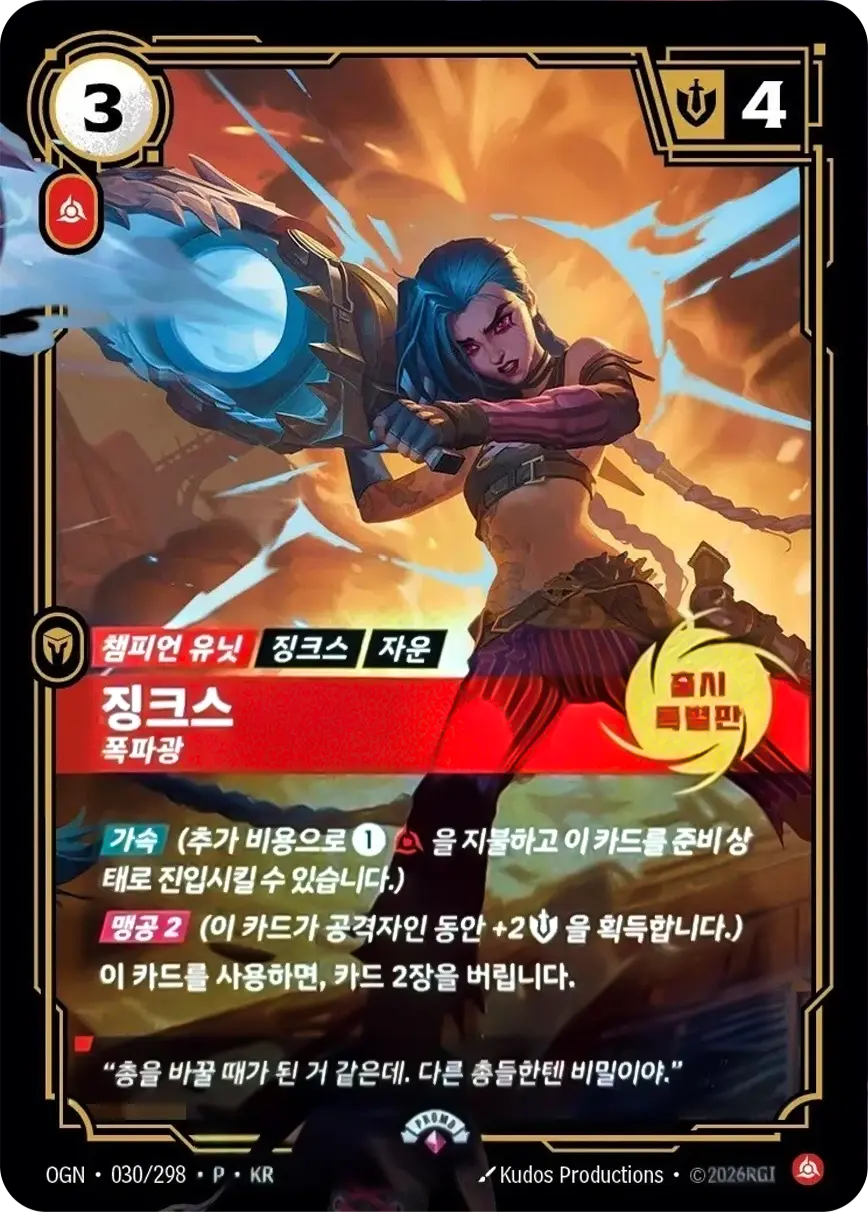
Korean: Recognizable by the rigidly geometric structure of the Hangul alphabet. One of the clearest visual indicators of Korean is the presence of perfectly closed circles and ellipses within the characters, such as ㅇ, ㅎ, and 아.
Chinese (General): Appears as a very dense and uniform block of text. The logograms are mainly made up of intersecting straight strokes, without the soft, flowing lines characteristic of Japanese or the circular shapes commonly found in Korean.
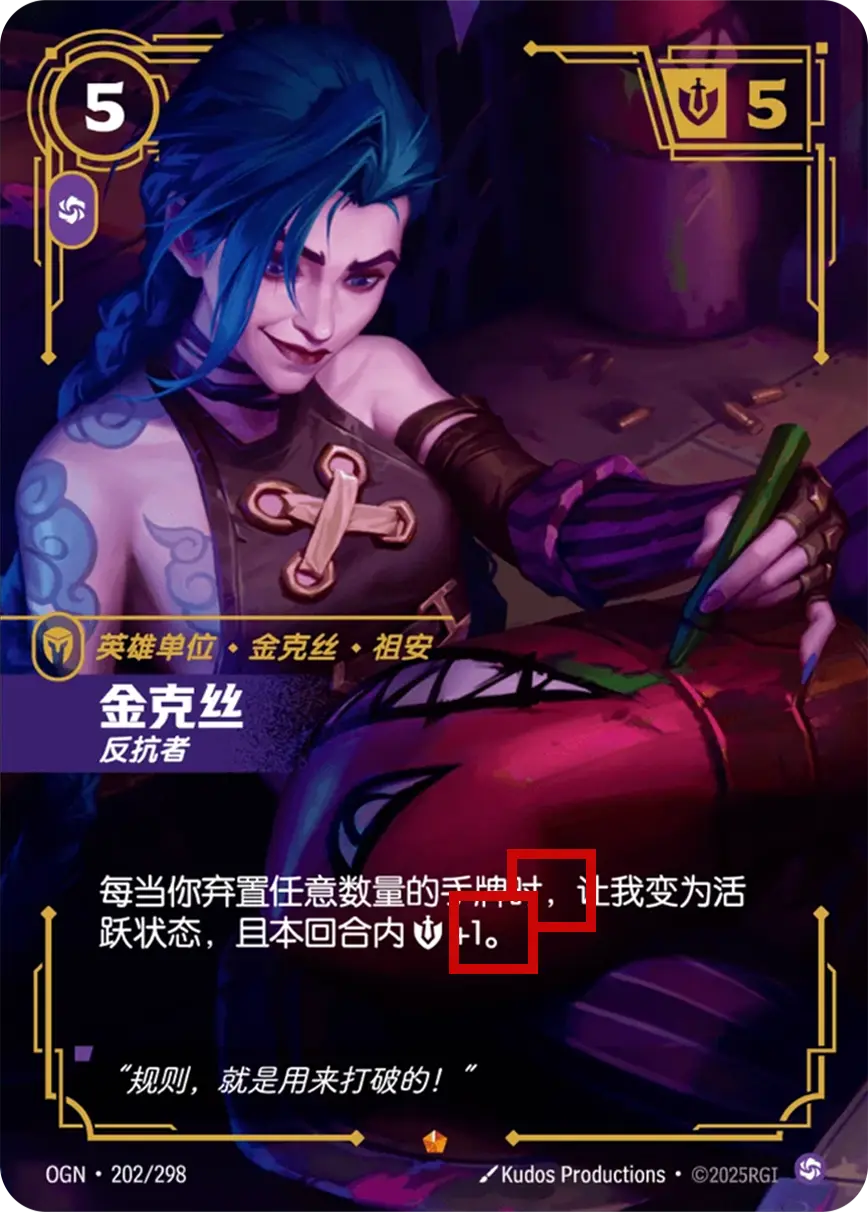
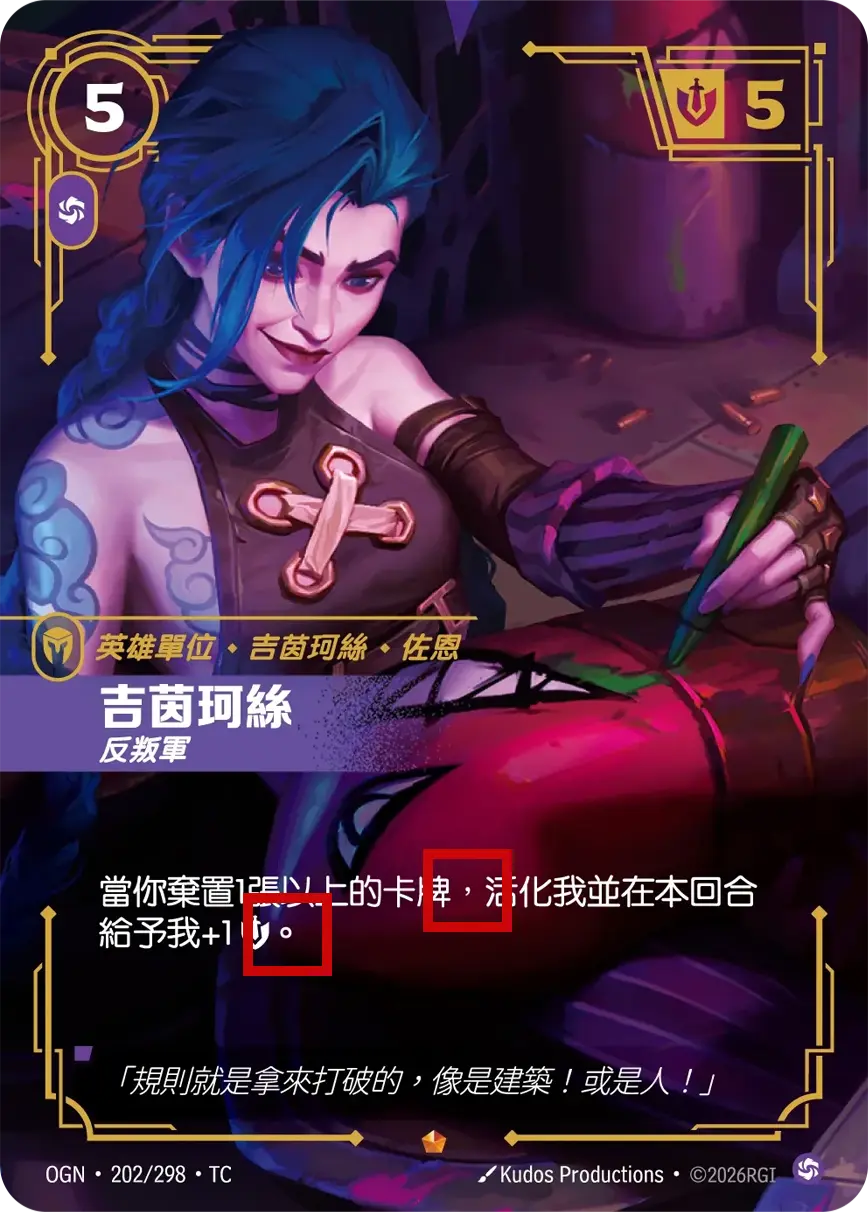
Distinguishing between these two languages can be one of the trickiest steps. The most reliable method is to look at the position of the full stop, which is represented in Chinese by a small hollow circle (。).
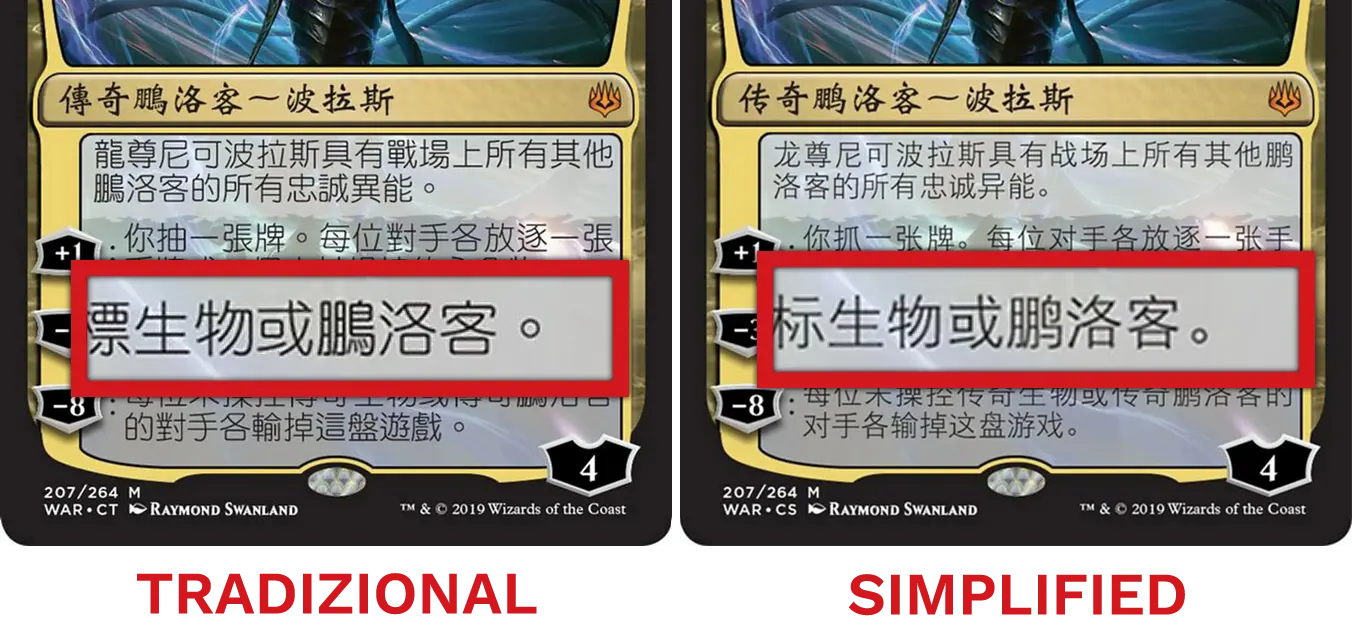
PUNCTUATION
Traditional Chinese (ZHT / CT)
The full stop and commas are aligned in the middle of the text.
Simplified Chinese (ZHS / CS)
The full stop is positioned at the bottom of the text, as in Western punctuation.
SPECIAL EDITIONS
While there are general guidelines based on punctuation and character density, some historical sets contain specific exceptions that require a closer look at the copyright information and expansion symbols.
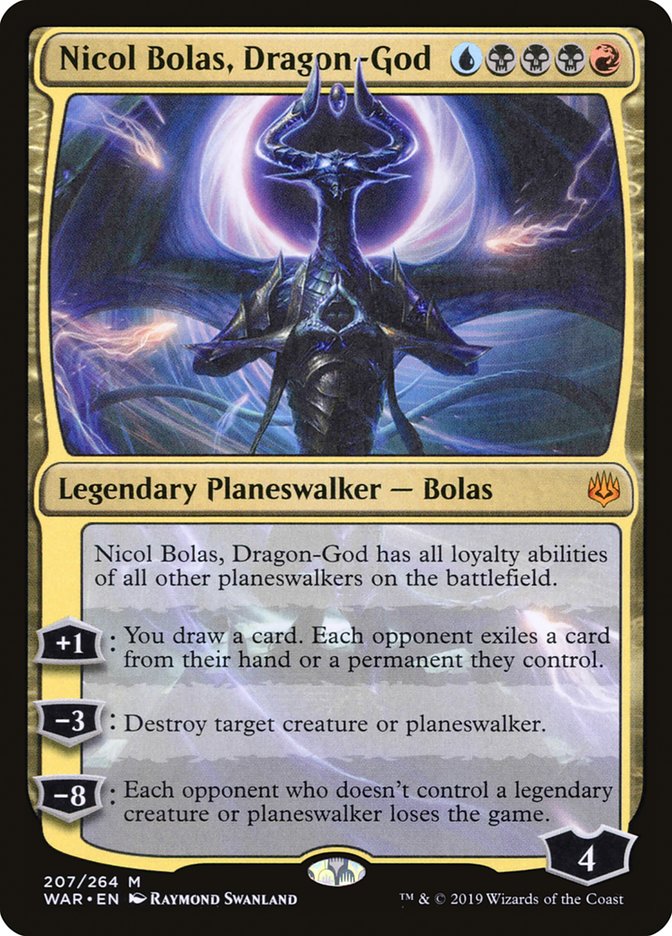
For accurate identification, refer to the dedicated guide by selecting the Chinese language in the selector for the card below to explore the differences between Chinese variants across different sets. This tool will help you accurately distinguish between Simplified and Traditional Chinese depending on the printing period.









.jpg)
.jpg)
.jpg)
.jpg)
.jpg)
.jpg)
.jpg)
.jpg)
Set: "PORTAL" (1997)
Traditional and Simplified both exist.
TRADITIONAL(ZHT):
➤Set symbol: always printed in black, a regardless of the card’s rarity.
SIMPLIFIED (ZHC):
➤ Colored set symbol (black, silver, or gold), depending on the card’s rarity.
➤The card name and flavor text are more pronounced (almost bold).
➤ The circular full stop “。” is smaller and aligned in the middle of the text, as in Traditional Chinese.
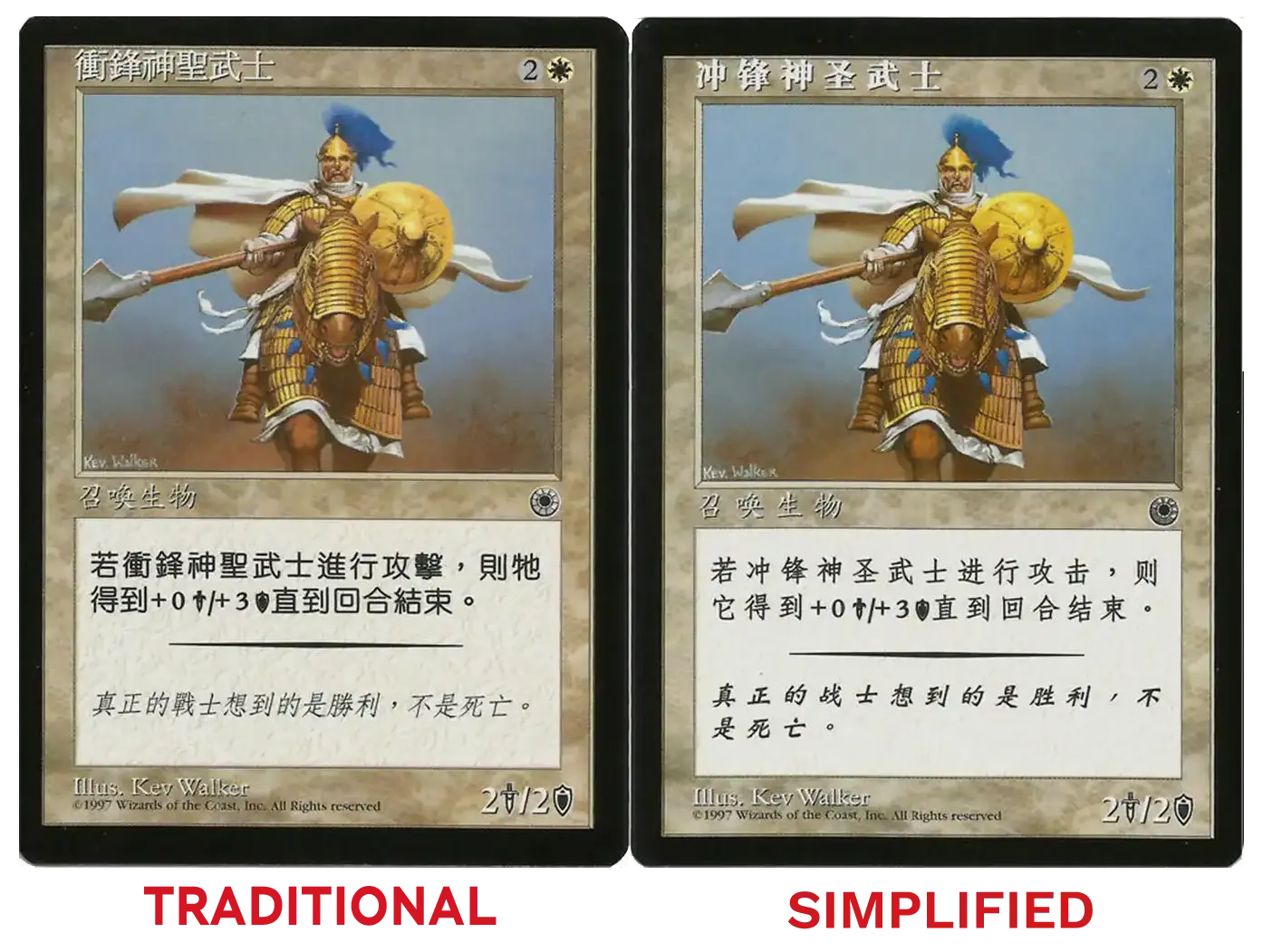
Set: "FIFTH EDITION" (1997/1998)
Cards printed in both Traditional Chinese and Simplified Chinese.
TRADITIONAL (ZHT):
➤ Has a 1997 copyright date.
SIMPLIFIED (ZHC):
➤ Has the set symbol and a 1998 copyright date.
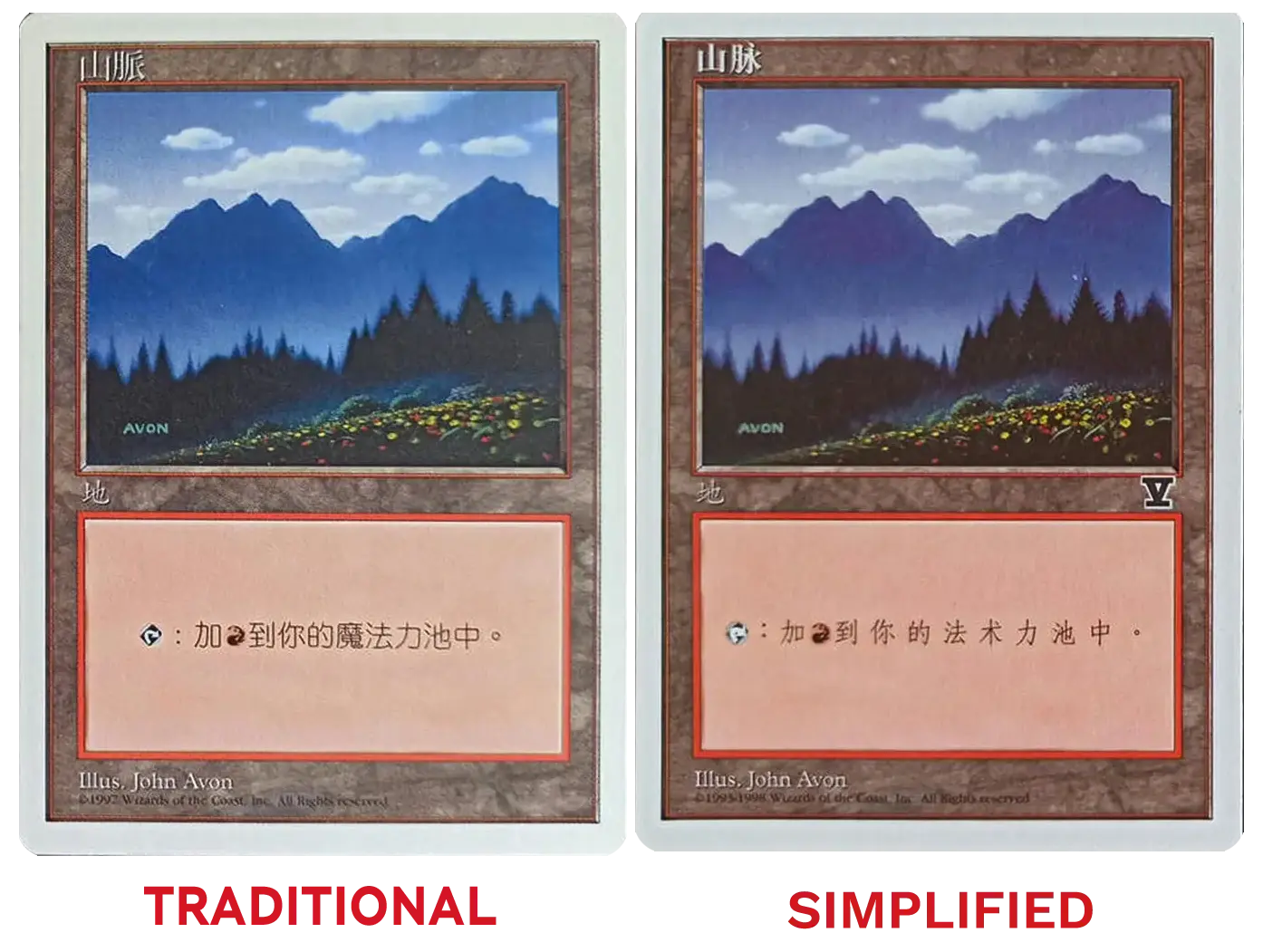
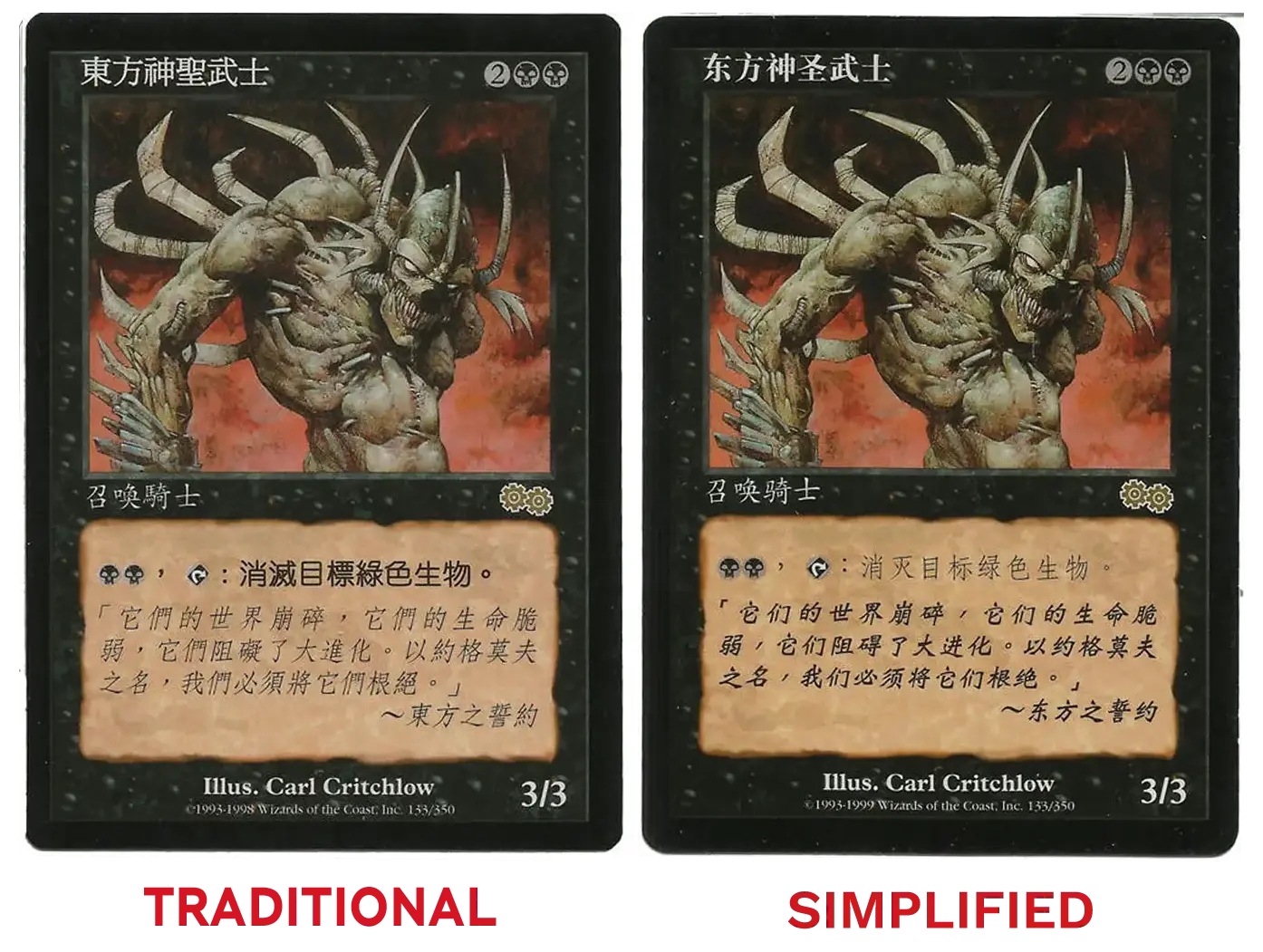
Set: "URZA'S SAGA" (1998/1999)
Cards printed in both Traditional Chinese and Simplified Chinese.
TRADITIONAL (ZHT):
➤ Has a 1998 copyright date, and the rules text — not the flavor text — appears visibly more pronounced (bold).
SIMPLIFIED (ZHC):
➤ Has a 1999 copyright date, with only the flavor text appearing more pronounced (bold).
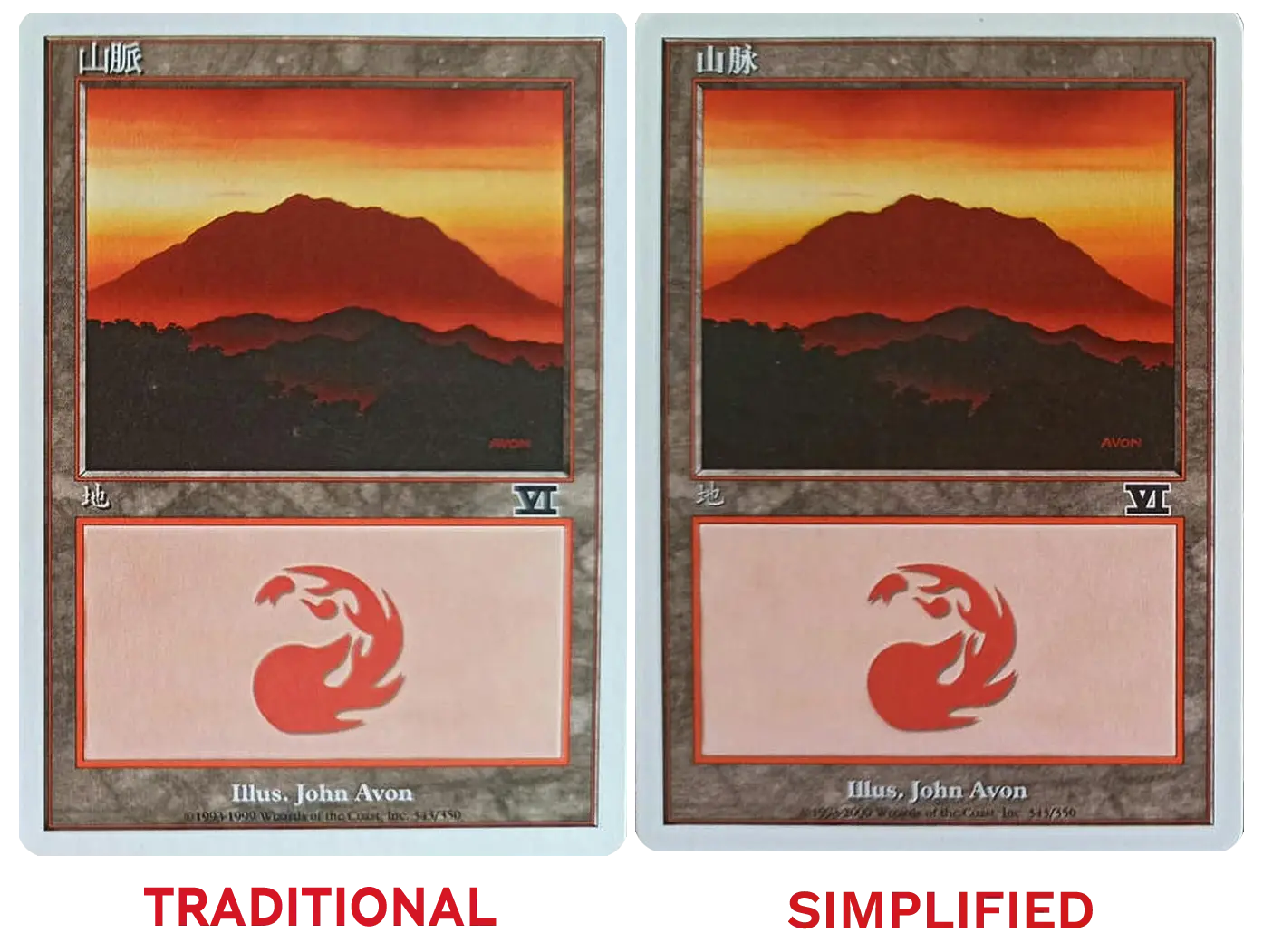
Set: "SIXTH EDITION" (1999/2000)
Cards printed in both Traditional Chinese and Simplified Chinese.
TRADITIONAL (ZHT):
➤ Has a 1998 copyright date, and the rules text — rather than the flavor text — appears visibly more pronounced (bold).
SIMPLIFIED (ZHC):
➤ Has a 1999 copyright date, with only the flavor text appearing more pronounced (bold).
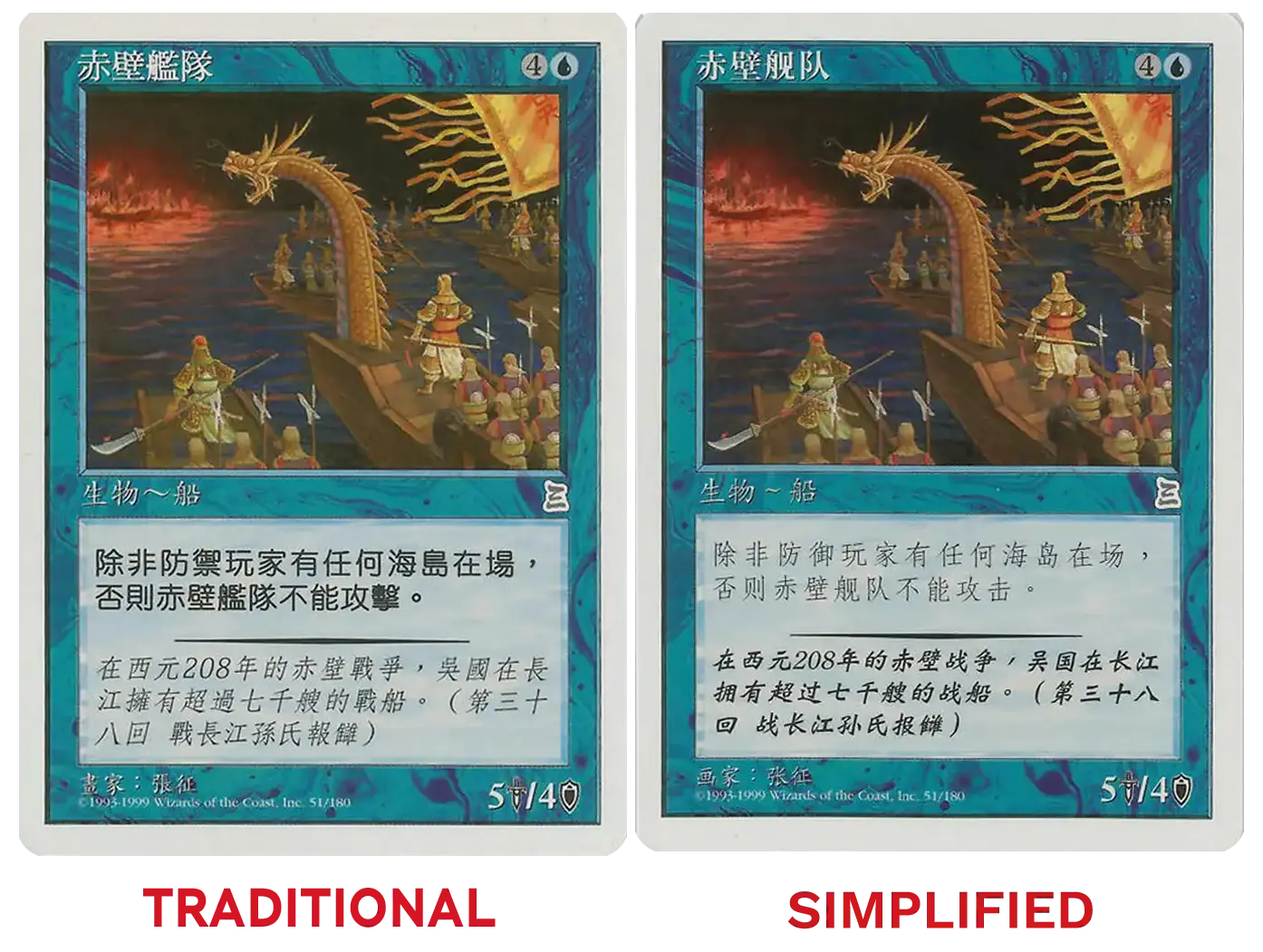
Set: "PORTAL THREE KINGDOMS" (1999)
Cards printed in both Traditional Chinese and Simplified Chinese.
TRADITIONAL (ZHT):
➤ The rules text is more pronounced (bold), while the flavor text remains regular and visually thinner.
SIMPLIFIED (ZHC):
➤ Only the flavor text is more pronounced (bold).
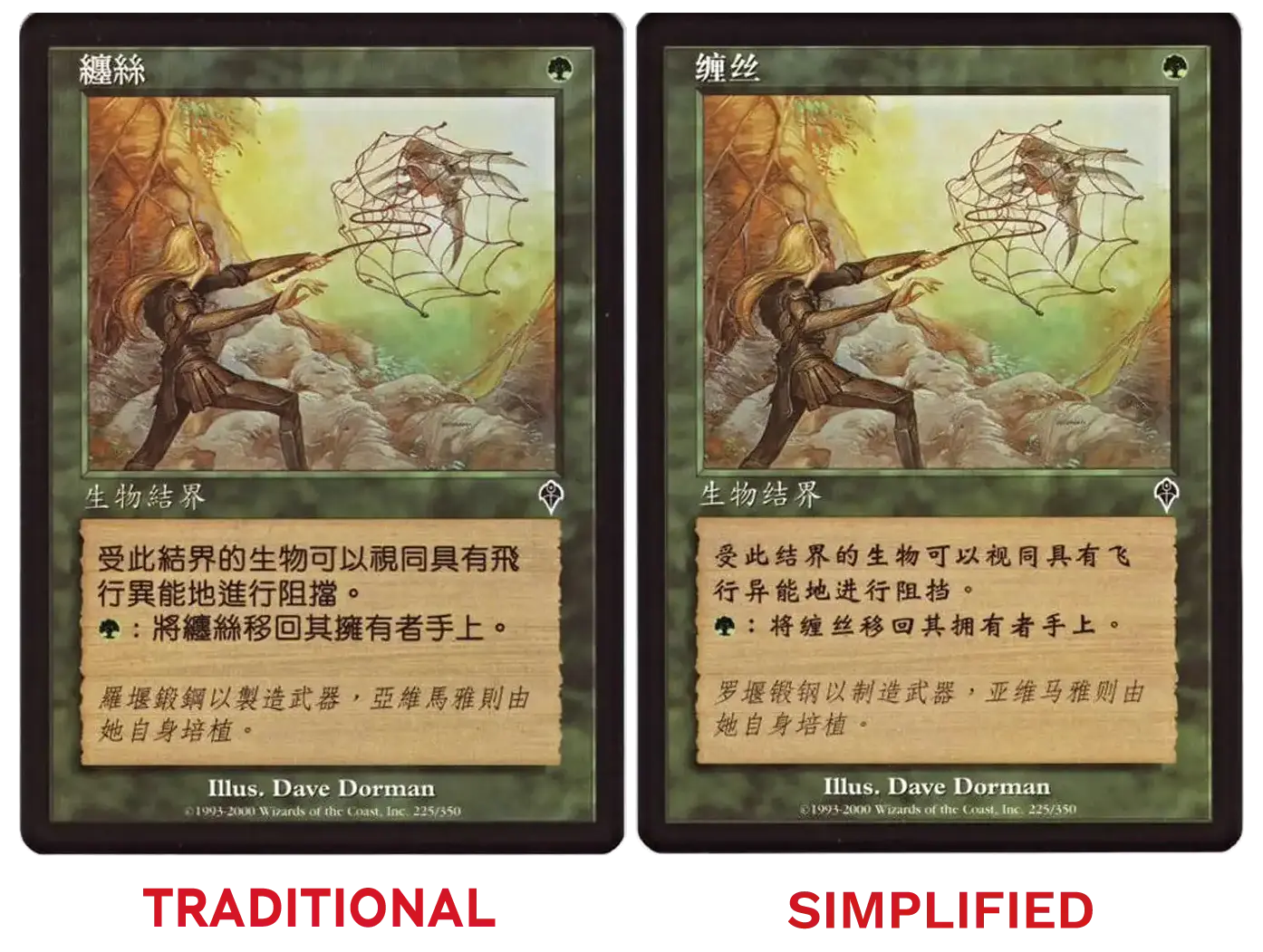
Set: "INVASION" (2000)
Cards printed in both Traditional Chinese and Simplified Chinese.
TRADITIONAL (ZHT):
➤ The font appears more angular and geometric. The characters have a “block-like” appearance, with strokes that are very uniform and consistent in thickness.
SIMPLIFIED (ZHC):
➤ The font has a more fluid and calligraphic style. The characters look as if they were painted with a brush, with softer strokes and noticeably varying thickness within the same character.
.jpg)
Set: "PORTAL" (1997)
Traditional and Simplified both exist.
TRADITIONAL(ZHT):
➤Set symbol: always printed in black, a regardless of the card’s rarity.
SIMPLIFIED (ZHC):
➤ Colored set symbol (black, silver, or gold), depending on the card’s rarity.
➤The card name and flavor text are more pronounced (almost bold).
➤ The circular full stop “。” is smaller and aligned in the middle of the text, as in Traditional Chinese.
Set: "FIFTH EDITION" (1997/1998)
Cards printed in both Traditional Chinese and Simplified Chinese.
TRADITIONAL (ZHT):
➤ Has a 1997 copyright date.
SIMPLIFIED (ZHC):
➤ Has the set symbol and a 1998 copyright date.
Set: "URZA'S SAGA" (1998/1999)
Cards printed in both Traditional Chinese and Simplified Chinese.
TRADITIONAL (ZHT):
➤ Has a 1998 copyright date, and the rules text — not the flavor text — appears visibly more pronounced (bold).
SIMPLIFIED (ZHC):
➤ Has a 1999 copyright date, with only the flavor text appearing more pronounced (bold).
Set: "SIXTH EDITION" (1999/2000)
Cards printed in both Traditional Chinese and Simplified Chinese.
TRADITIONAL (ZHT):
➤ Has a 1998 copyright date, and the rules text — rather than the flavor text — appears visibly more pronounced (bold).
SIMPLIFIED (ZHC):
➤ Has a 1999 copyright date, with only the flavor text appearing more pronounced (bold).
Set: "PORTAL THREE KINGDOMS" (1999)
Cards printed in both Traditional Chinese and Simplified Chinese.
TRADITIONAL (ZHT):
➤ The rules text is more pronounced (bold), while the flavor text remains regular and visually thinner.
SIMPLIFIED (ZHC):
➤ Only the flavor text is more pronounced (bold).
Set: "INVASION" (2000)
Cards printed in both Traditional Chinese and Simplified Chinese.
TRADITIONAL (ZHT):
➤ The font appears more angular and geometric. The characters have a “block-like” appearance, with strokes that are very uniform and consistent in thickness.
SIMPLIFIED (ZHC):
➤ The font has a more fluid and calligraphic style. The characters look as if they were painted with a brush, with softer strokes and noticeably varying thickness within the same character.
.jpg)
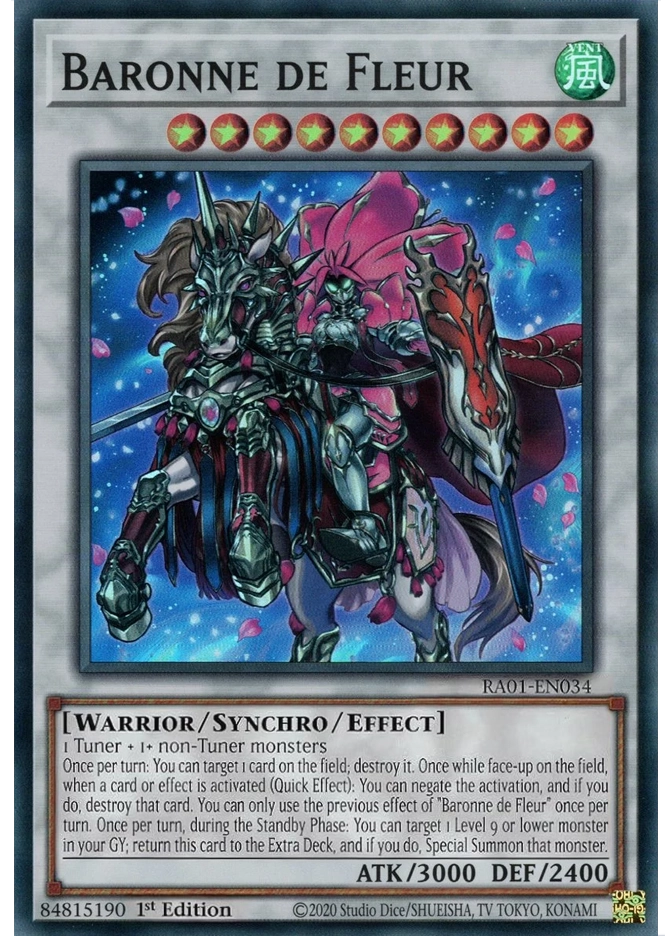
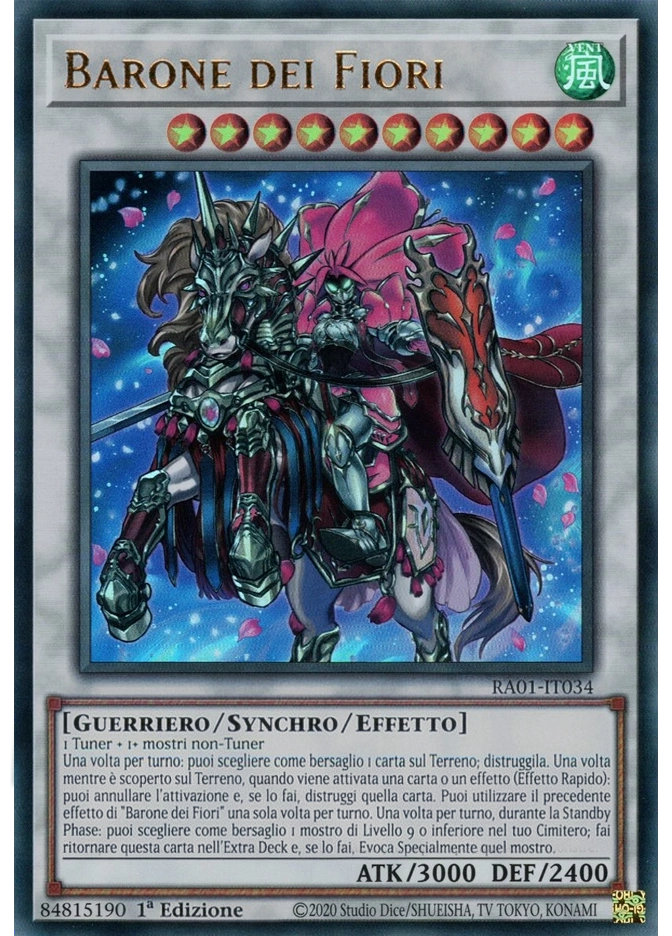
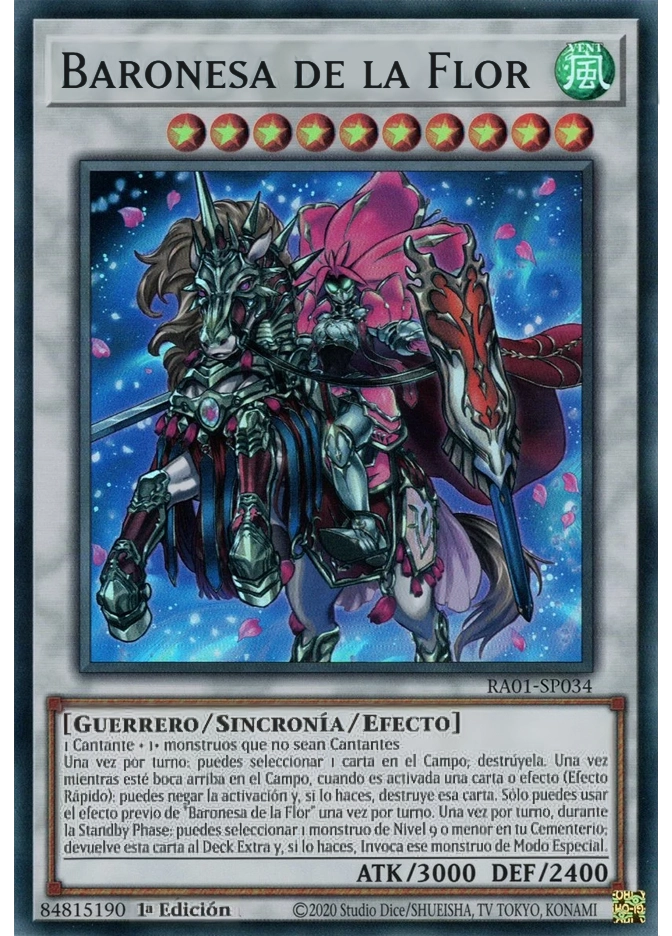
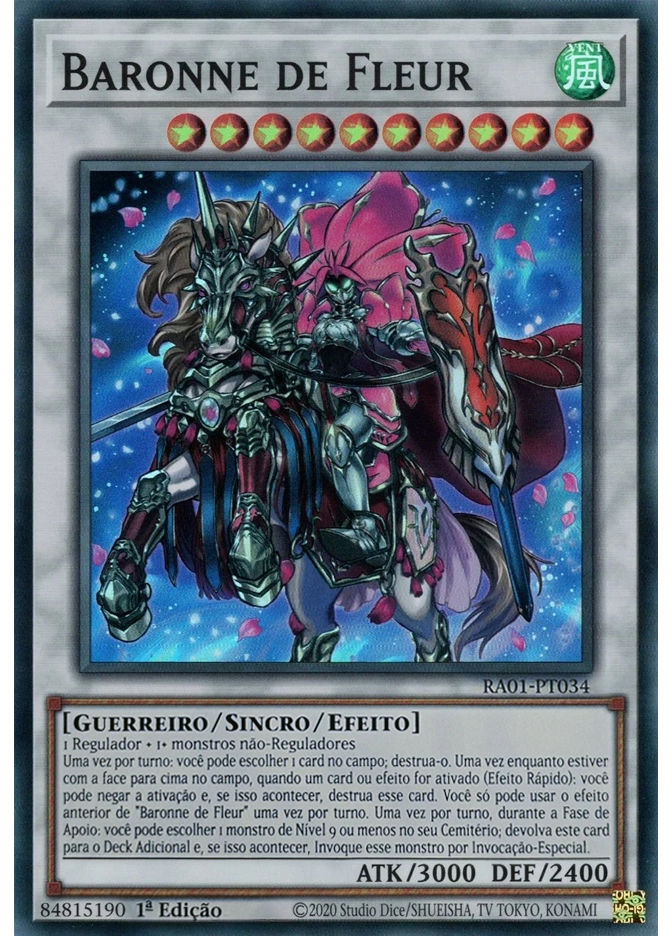
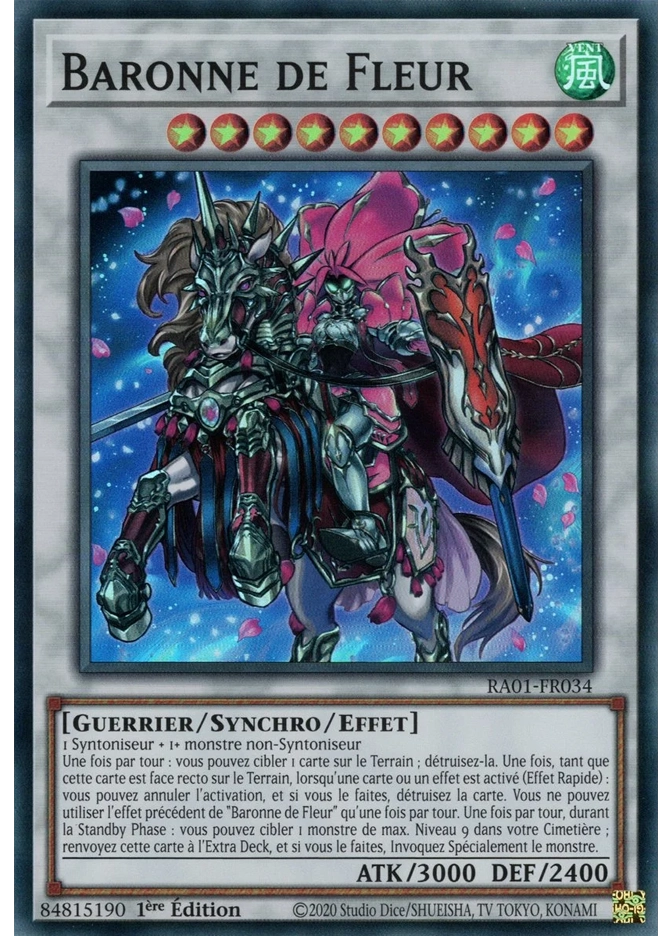
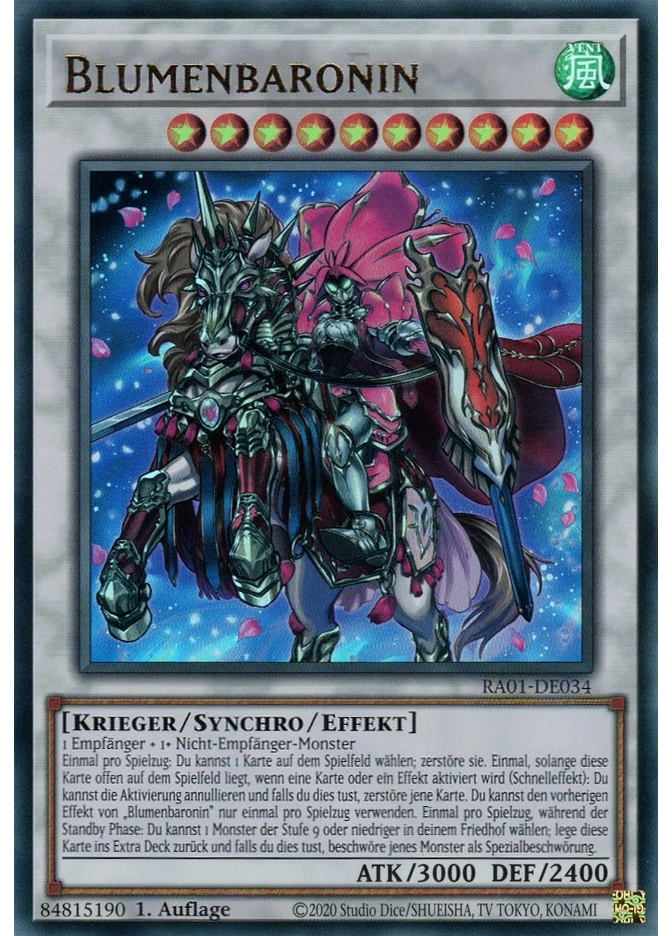
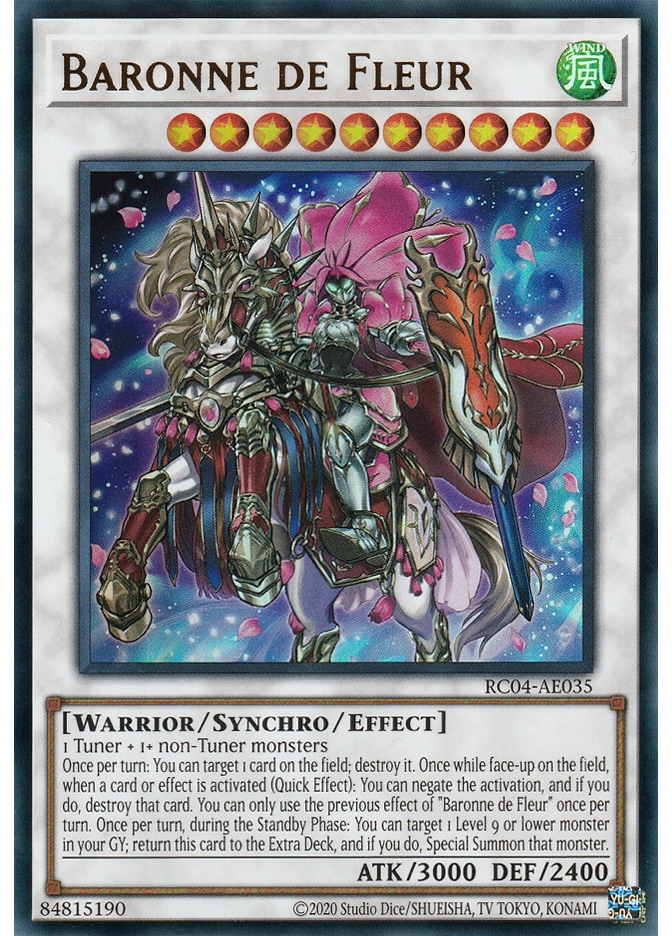
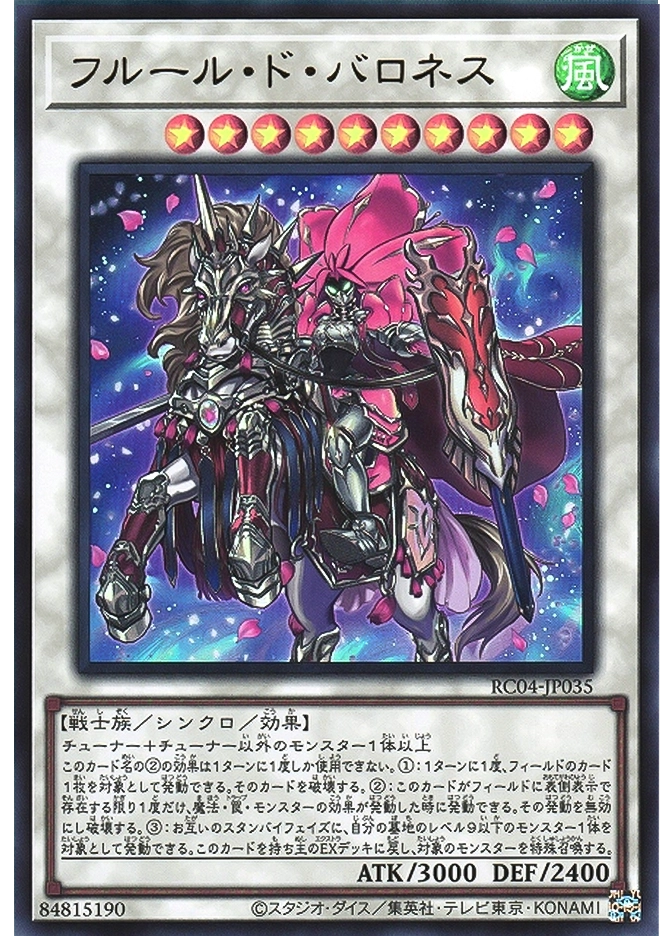
For the vast majority of Yu-Gi-Oh! cards, including reprints of early sets, identifying the language is very straightforward. Below the bottom-right corner of the artwork, you’ll find the card’s identification code, usually structured as [SET CODE]-[LANGUAGE][NUMBER] (e.g. BLZD-EN001).
LANGUAGE CODES:
EN → English
IT / I → Italian
DE / G → German
FR → French
ES → Spanish
PT → Portuguese
JP / J → Japanese
KR / K → Korean
SC → Simplified Chinese
TC → Traditional Chinese
AE → Asian English
A → Australian
During the early years of the game (around 2002–2004), Konami had not yet introduced the two-letter language codes. Instead, to indicate the card’s language, the entire set code was changed, using an abbreviation based on the translated name of the set in the local language.
On these cards, the set code is followed by the card number only (e.g. LDD-001).Here are the most common and important cases to be aware of for the European and Western markets:
SET
ENGLISH
GERMAN
ITALIAN
FRENCH
SPANISH
Legend of Blue Eyes White D....
LOB
LOB
LDD
LDD
LDD
Metal Raiders
MRD
MRD
PMT
MRD
MRD
Pharaoh's Servant
PSV
PSV
SDF
SDP
SDP
Labyrinth of Nightmare
LON
LON
LDI
LDC
LDC
Magic Ruler / Spell Ruler
MRL / SRL
SRL
SDM
MDM
SDH
REPRINTS:⚠️
Watch out for reprints: If you have an Italian card from La Leggenda del Drago Bianco Occhi Blu, but its code reads LOB-IT001, you have a later reprint using the modern standard coding system. If the code reads LDD-001, it is an original printing from that period.
A particularly simple and reliable way to identify the language of Riftbound cards is to check the code shown next to the serial number. This indication makes it easy to quickly identify the card’s language version, even when the text itself is not easily recognizable.
LANGUAGE CODES:
EN → English
CS → Simplified Chinese
TC → Traditional Chinese
FR → French
KR → Korean
It is important to pay particular attention to the new Riftbound language versions that are starting to be distributed in 2026. In addition to the original Simplified Chinese version, Traditional Chinese and Korean editions are also being introduced.
The distinction is particularly important when it comes to the two Chinese versions: Simplified Chinese (SC) and Traditional Chinese (TC) can look very similar to anyone unfamiliar with the language, making them difficult to distinguish at a glance.
We recommend always checking the serial number as a simple, quick, and reliable way to determine which of the two Chinese versions you have, without needing to know the language or analyze the card’s text.